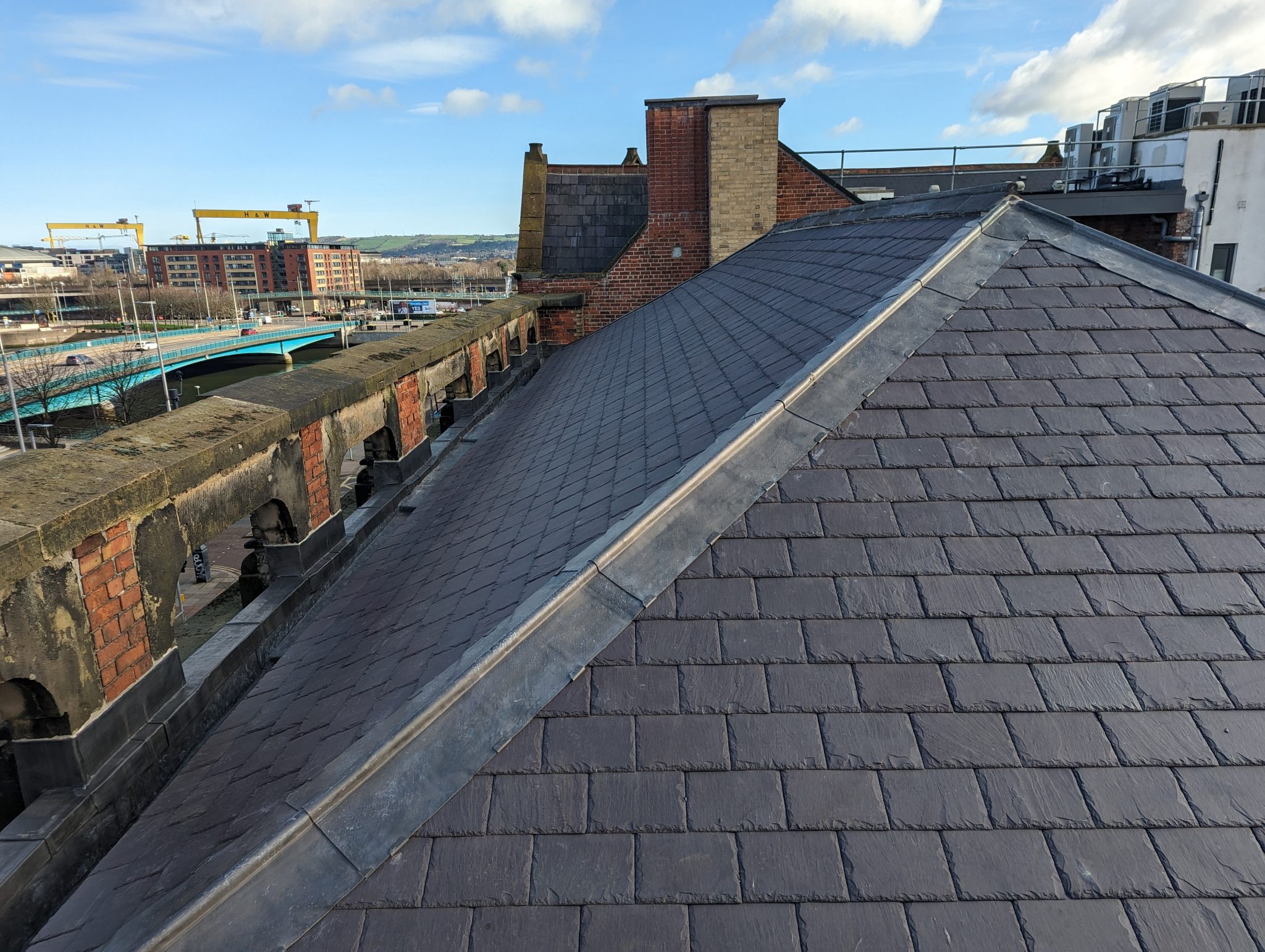
Major Repairs to Riddel’s Front Roof Complete
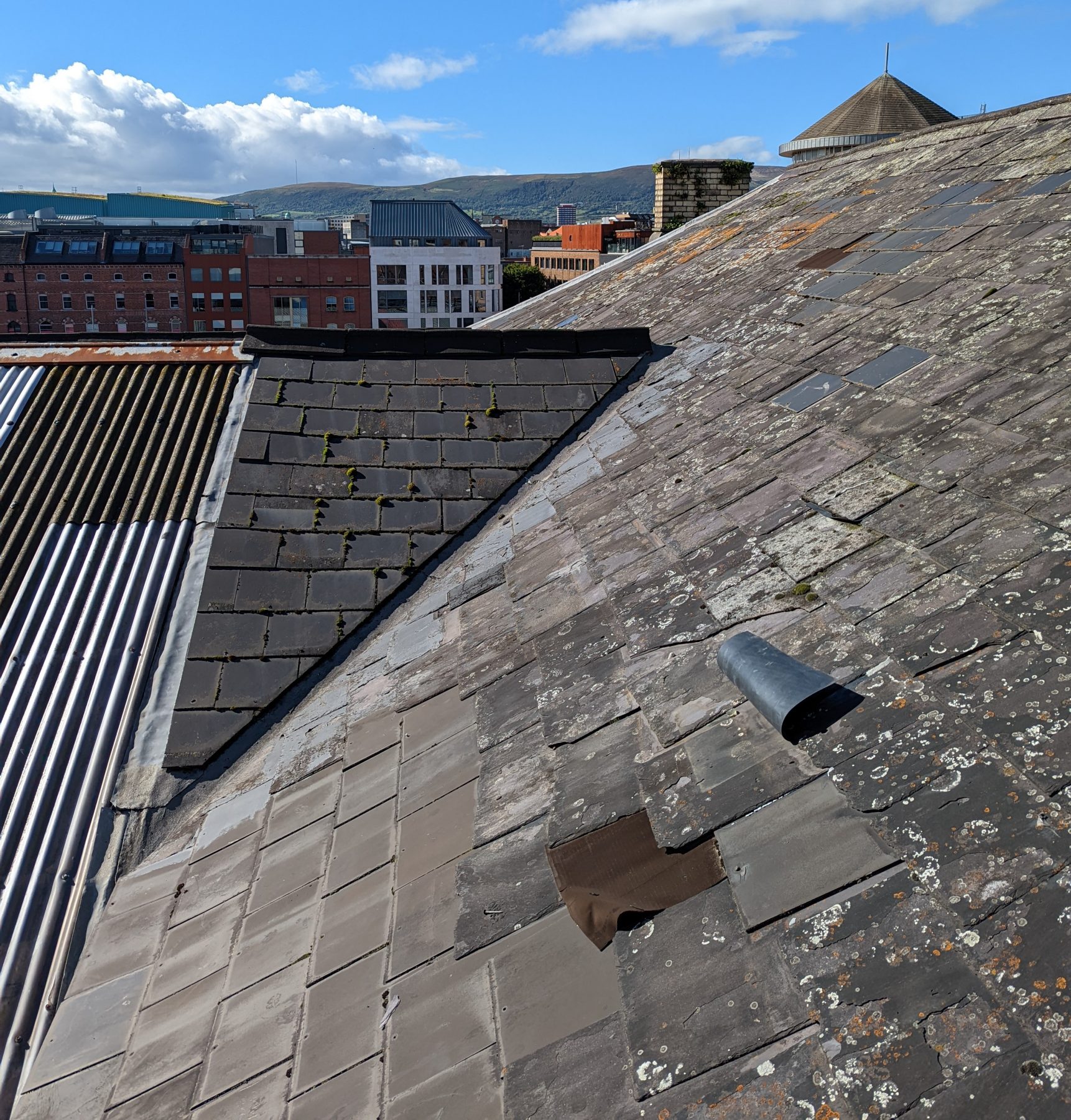
If you’ve passed Riddel’s Warehouse in the past few months you may have noticed scaffolding on its gable. Riddel’s has been undergoing some urgent repairs lately, not least to the front roof of the warehouse. Following bomb damage in the 1970s a bitumen covering had been put on part of the roof, while another part had been patched with salvaged slates. Unfortunately, this had deteriorated and water ingress was causing ongoing serious damage to structural timbers.

The membrane which had been used as a temporary covering had done a relatively good job of keeping the weather out over the past few decades. Now however, the condition of the roof was such, that it was not practicable to repair only part of it, and urgent action was required to prevent further decay.
When the covering was removed, we were pleased to find that the original timber sarking boards were mostly in good condition. This is a testament to the high-quality hardwoods used in Victorian buildings. The original terracotta ridge tiles were carefully salvaged also, and bitumen membrane was painstakingly removed from these.
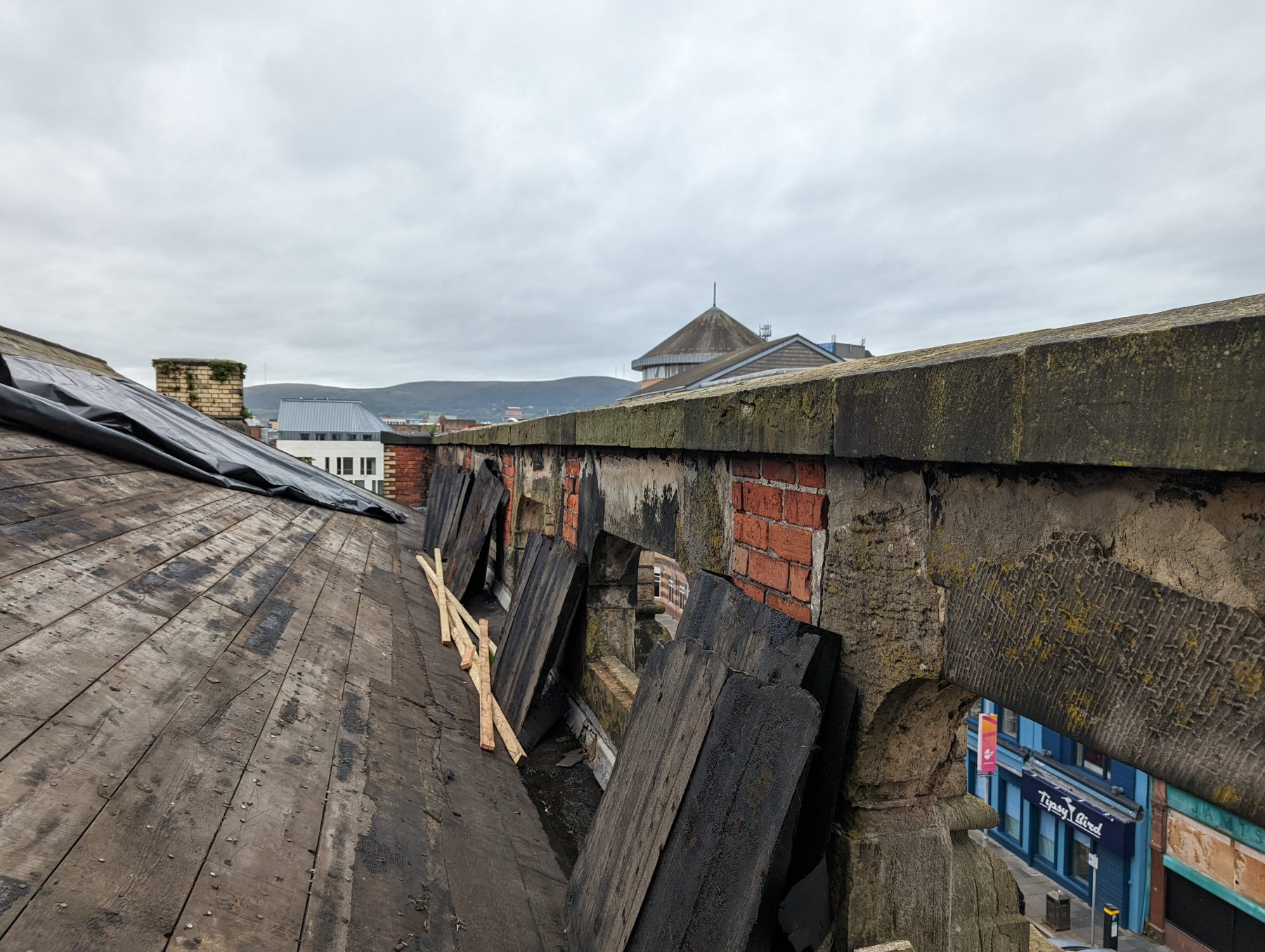
Membrane remove from north slope to reveal timber sarking behind parapet.
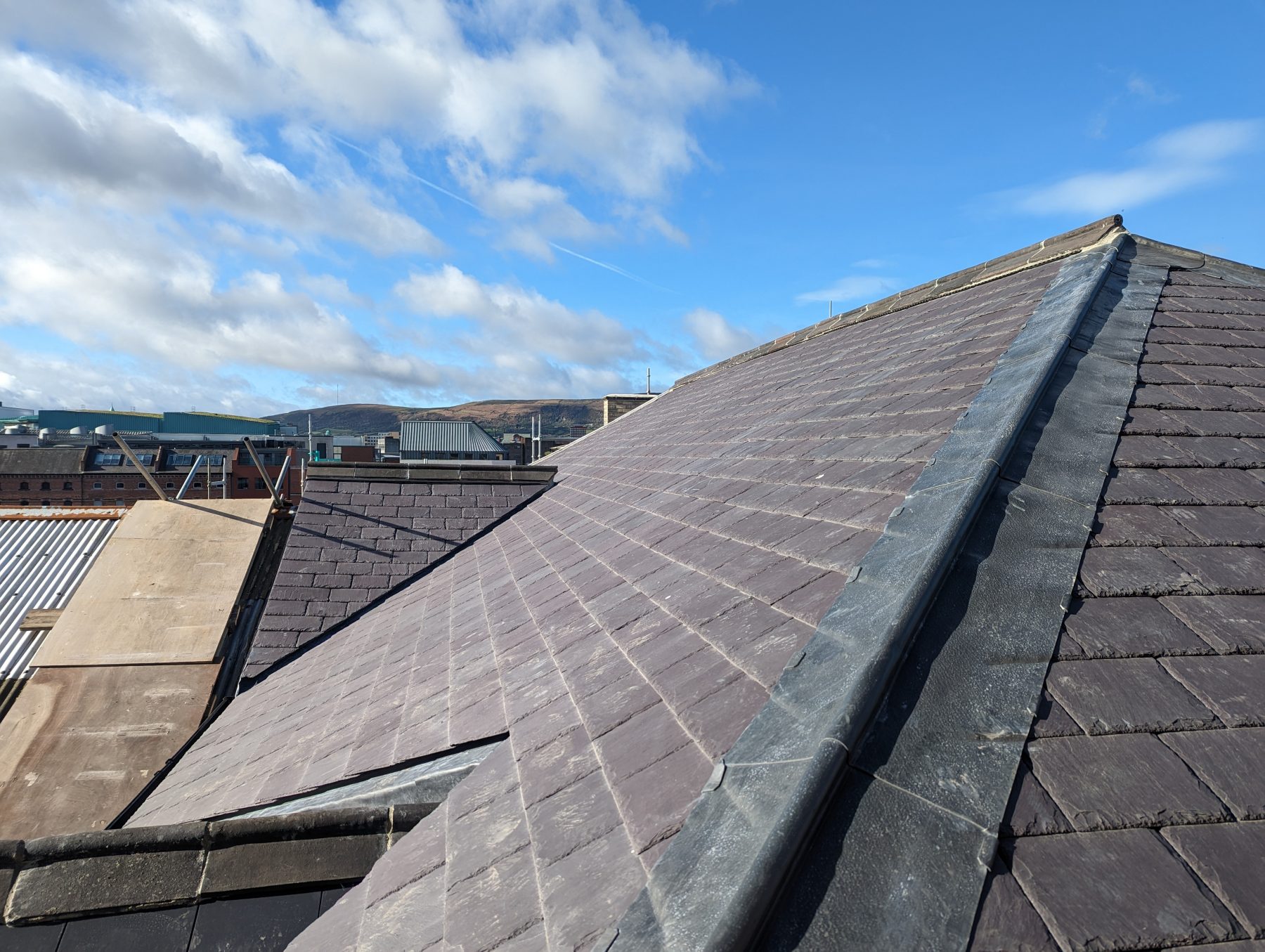
The membrane covering had not been an appropriate long-term solution and it was time to go back to the originally intended design. The opportunity was taken to provide a permanent solution rather than a temporary one that would have to be replaced in due course, and at the same time we took the decision to improve on the thermal qualities of the roof by installing a layer of natural woodfibre insulation before applying the final covering of natural Bangor Blue slates.
The salvaged ridge tiles were re-laid over a new vent which allows a flow of air between the slates and the insulation from eaves to ridge of the roof. This is an important detail which prevents the build-up of condensation under the covering which could damage the insulation. Lead ridges were installed to the hips.
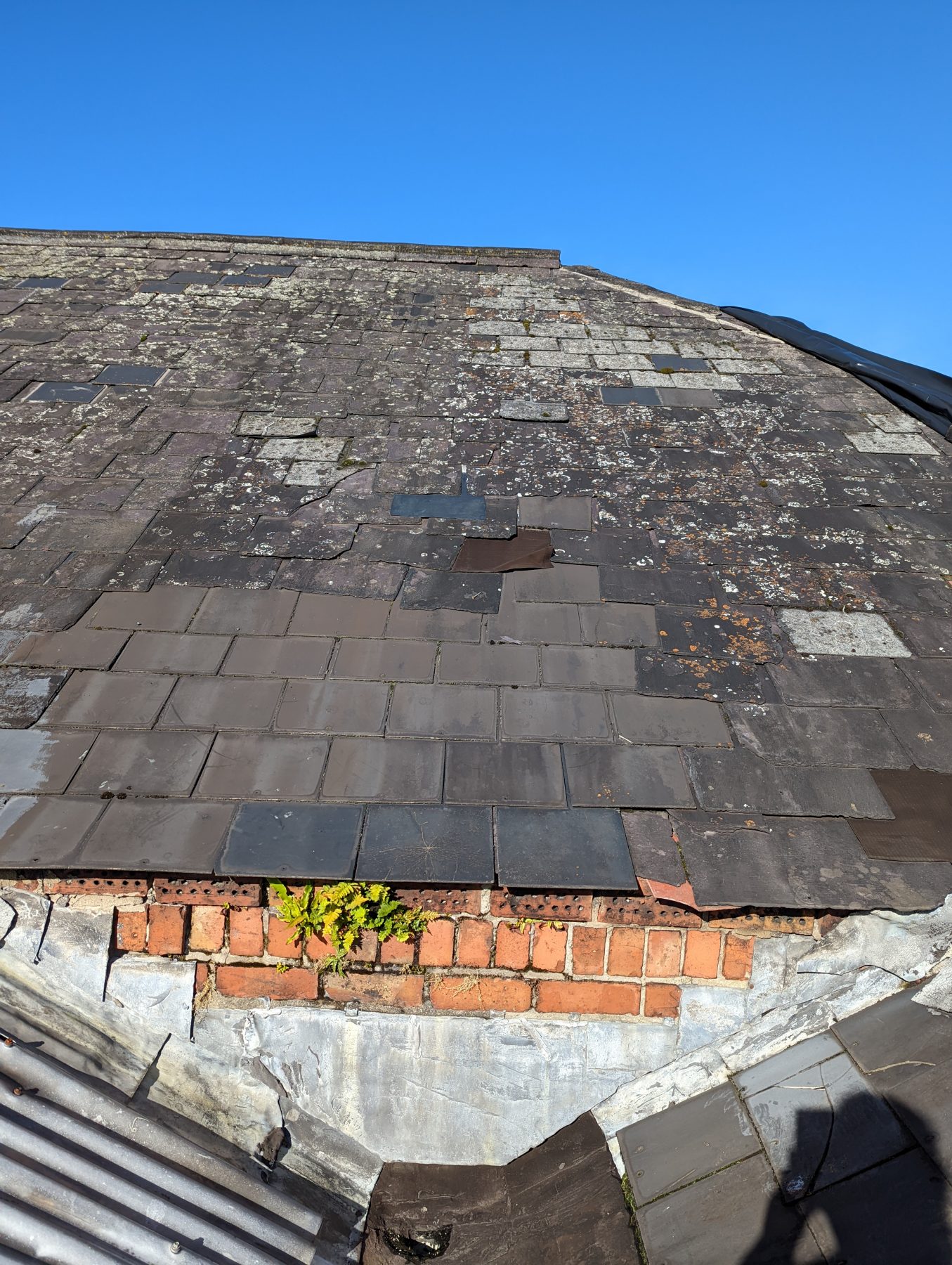
South slope before repairs. 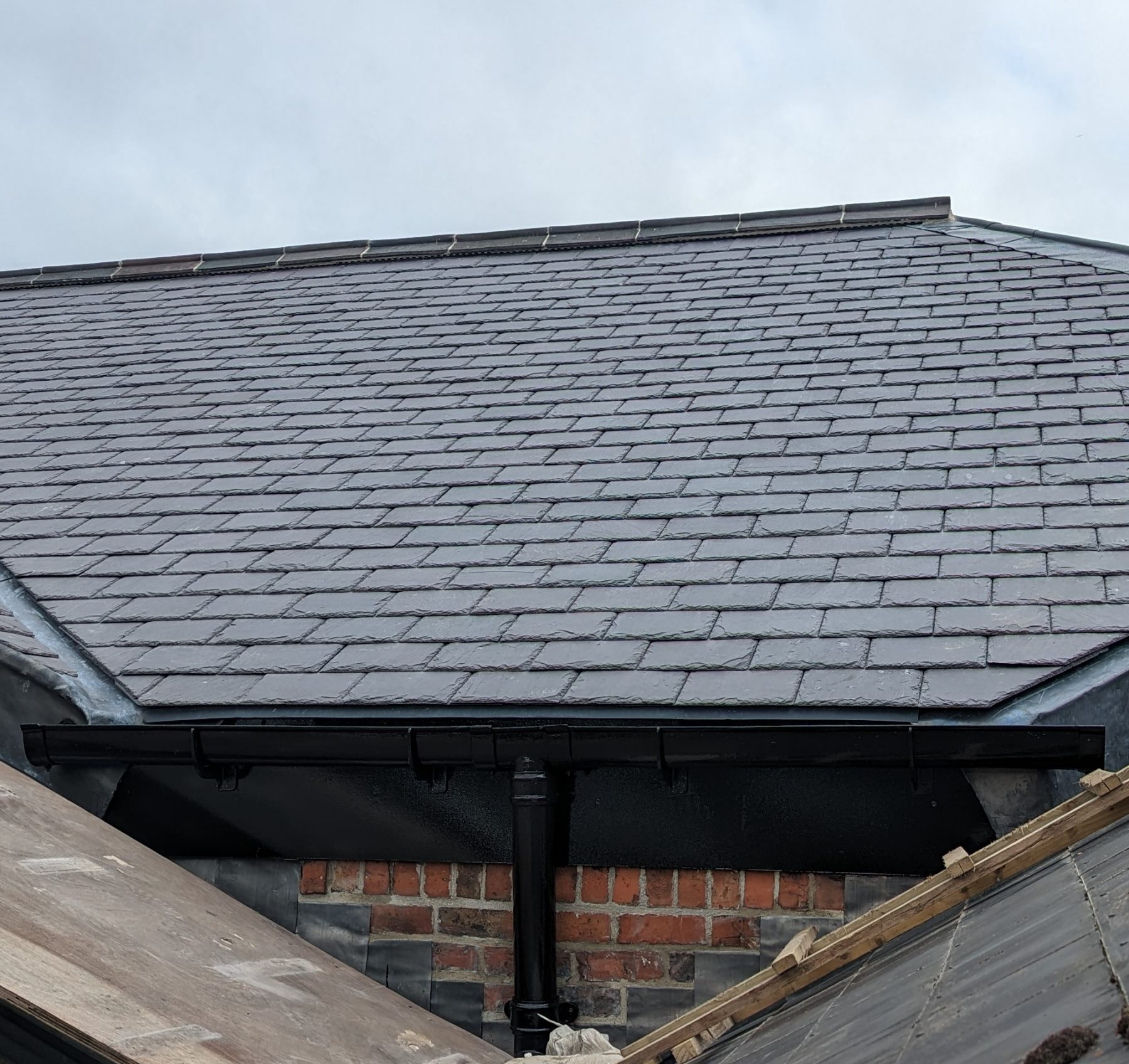
South slope after repairs.
A new lead-lined gutter was formed behind the front parapet with carefully designed deep catchment pits and grates to prevent leaves and other debris causing blocks to the rainwater goods. These details act as a good prevention but they do not eliminate the risk of rainwater goods becoming blocked, so it is always extremely important to carry out regular checks of these areas regardless of the age of a building.
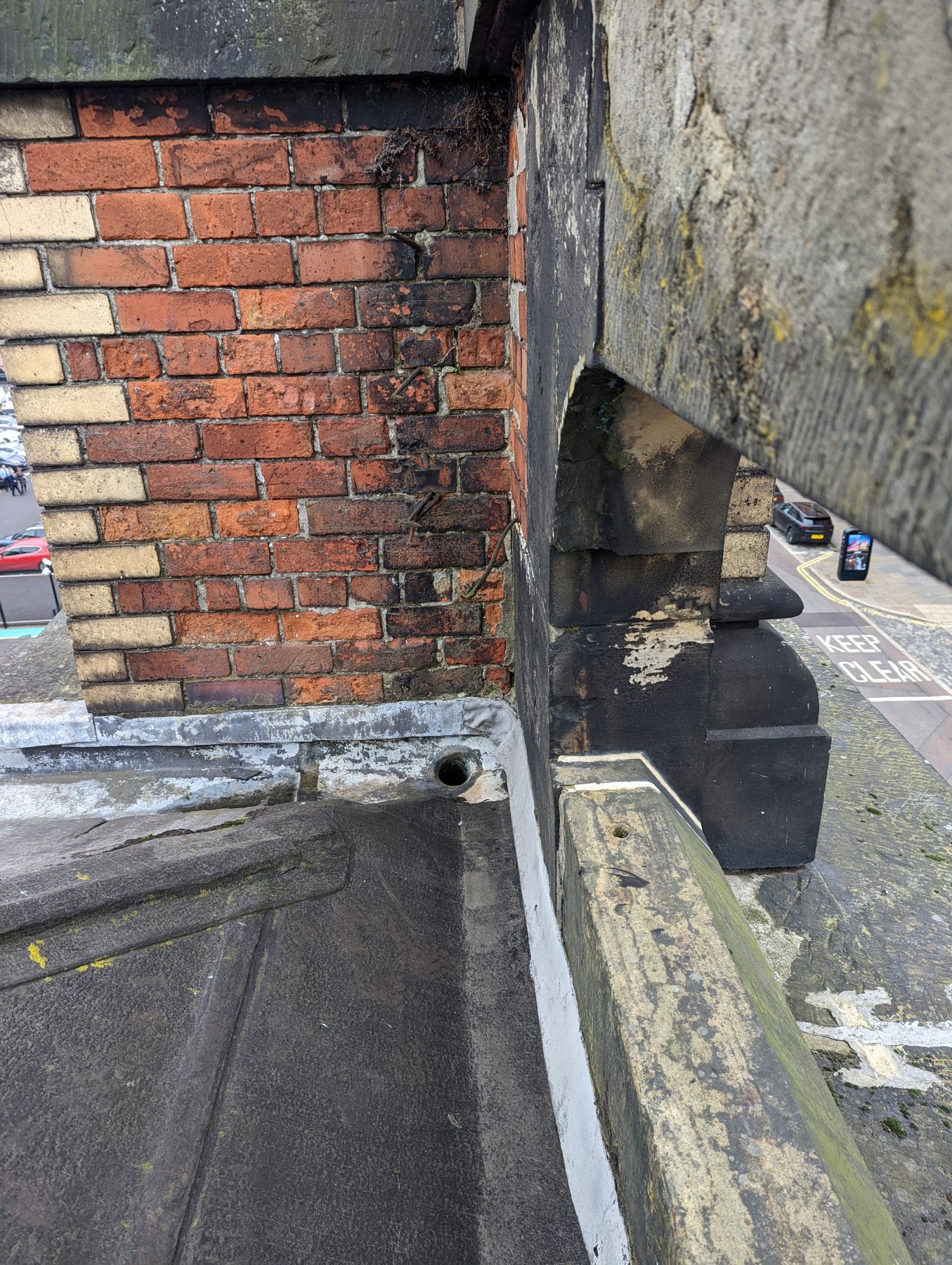
Undersized outlet behind front parapet was easily blocked. Membrane covering to roof and hip.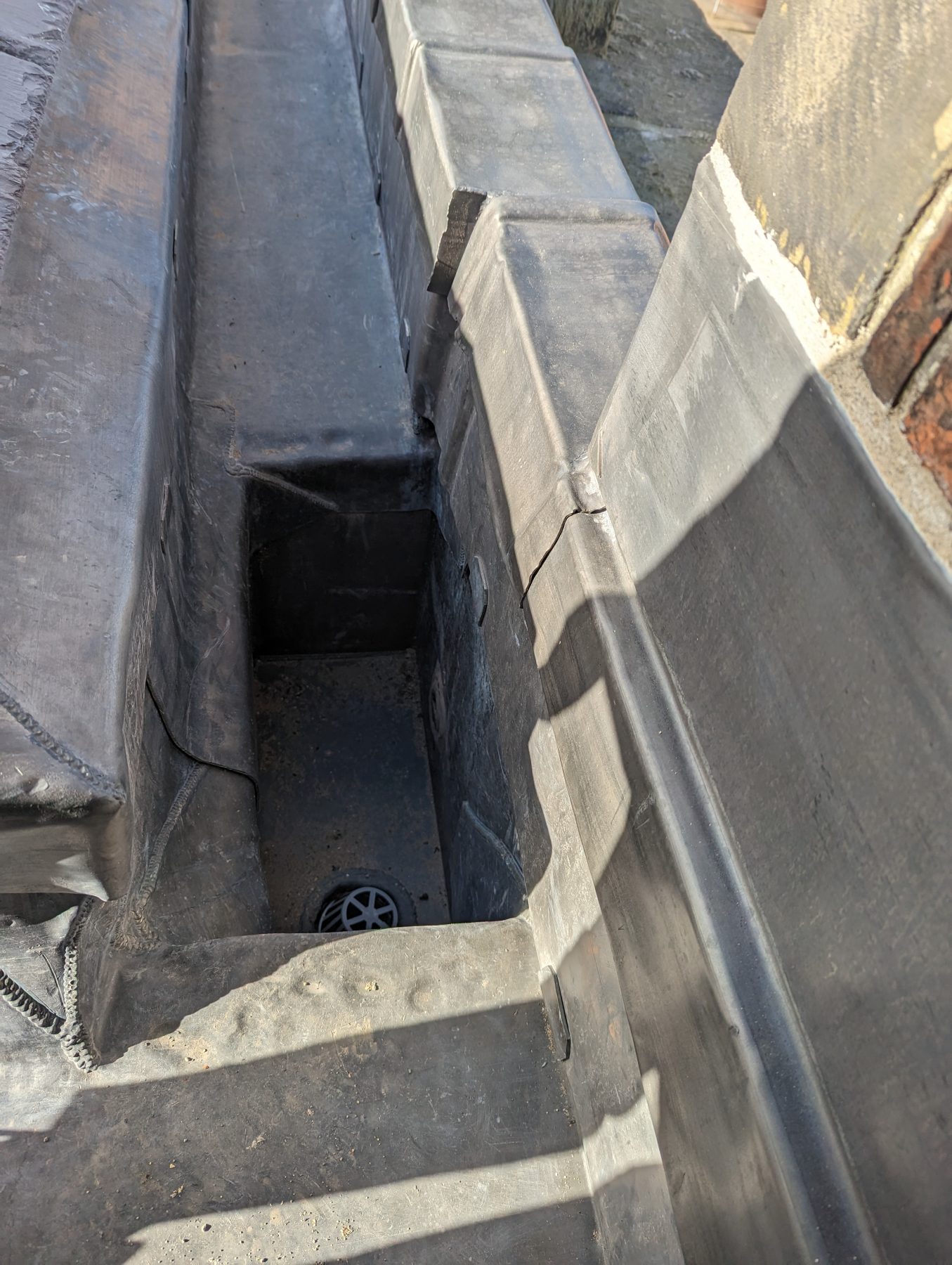
New lead lined parapet gutter and catchment pit. (Grate to be added)
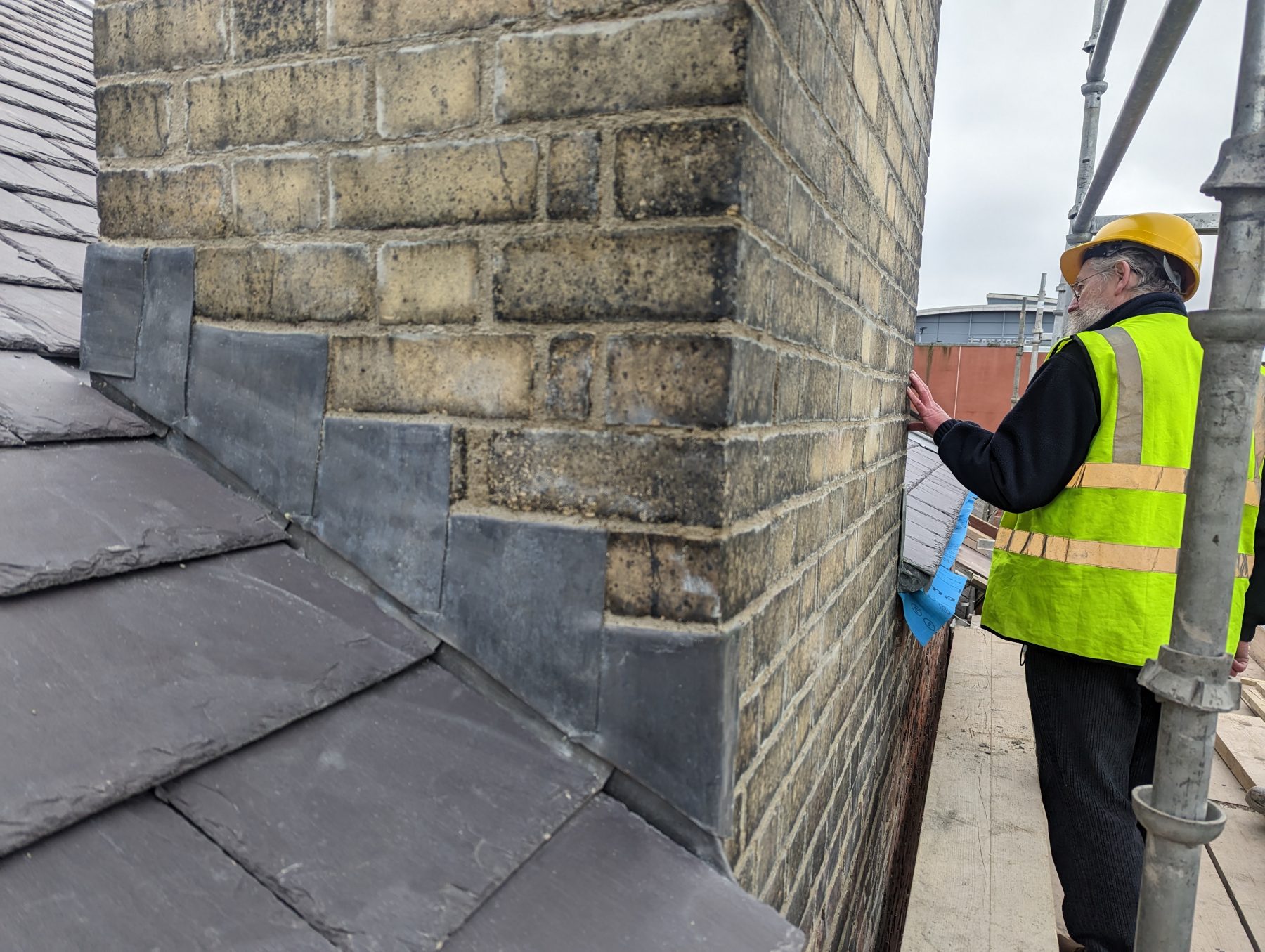
Finally, while we had scaffolding in place, any accessible vegetation was removed from the brick elevations and chimneys, and holes left in the mortar by the roots were repointed using lime mortar.

Now with that part of the roof repairs complete, the area below can dry out in preparation for the next stage of repairs to the structural timbers and damaged floorboards.
We are very proud of, and grateful to the team who designed and carried out the work:
- Architect: Alastair Coey Architects
- Main contractor: The Rock Stone Masonry
- Leadwork: The Leadman
- Slaters: Valley Roofing Ltd.
- Scaffolding: Houtman Scaffolding
These repairs were made possible thanks to generous support from the Architectural Heritage Fund and the WhiteMountain Programme as well as much appreciated income generated from film makers and other meanwhile users.
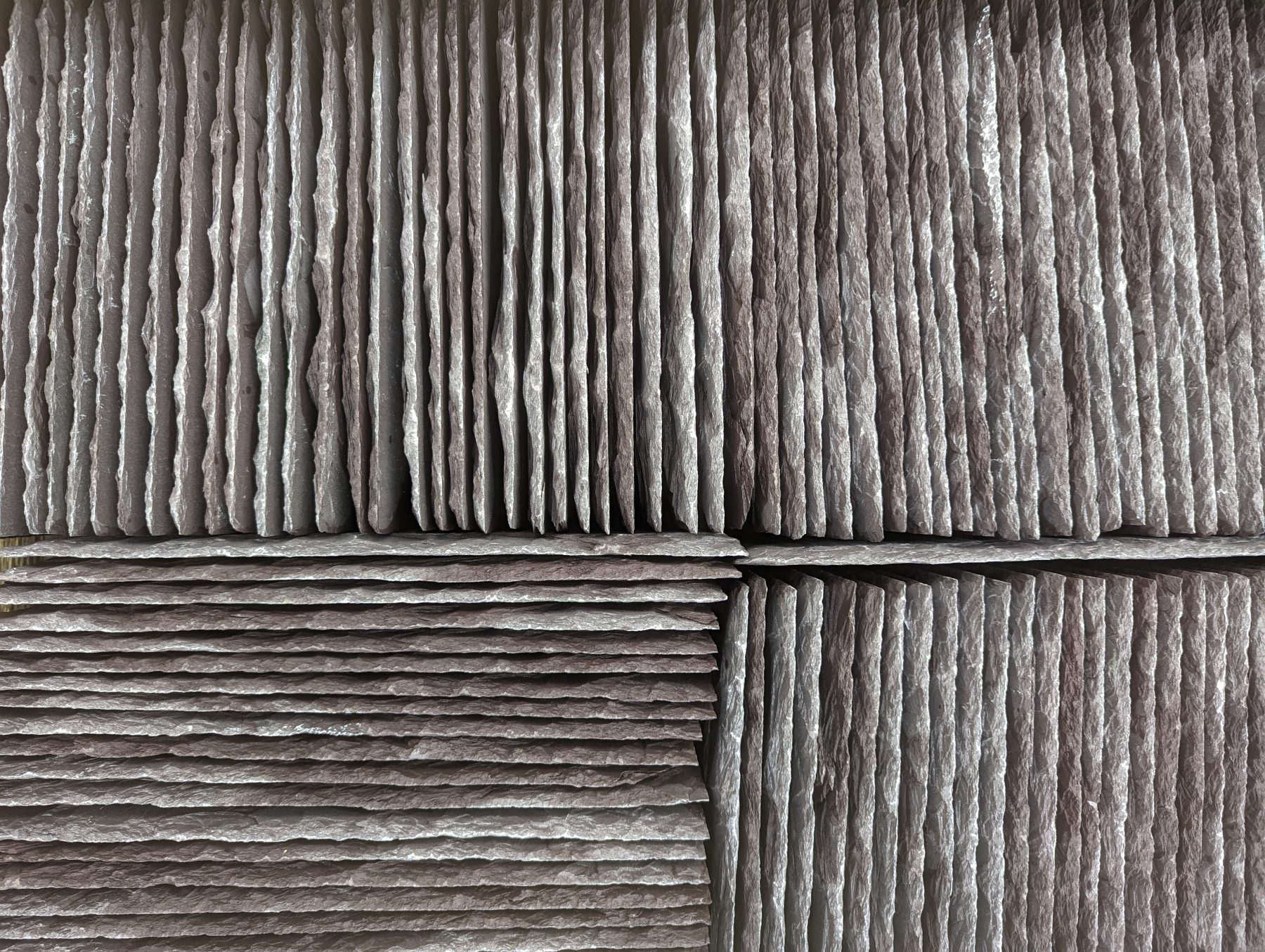
New Bangor Blue natural slates. 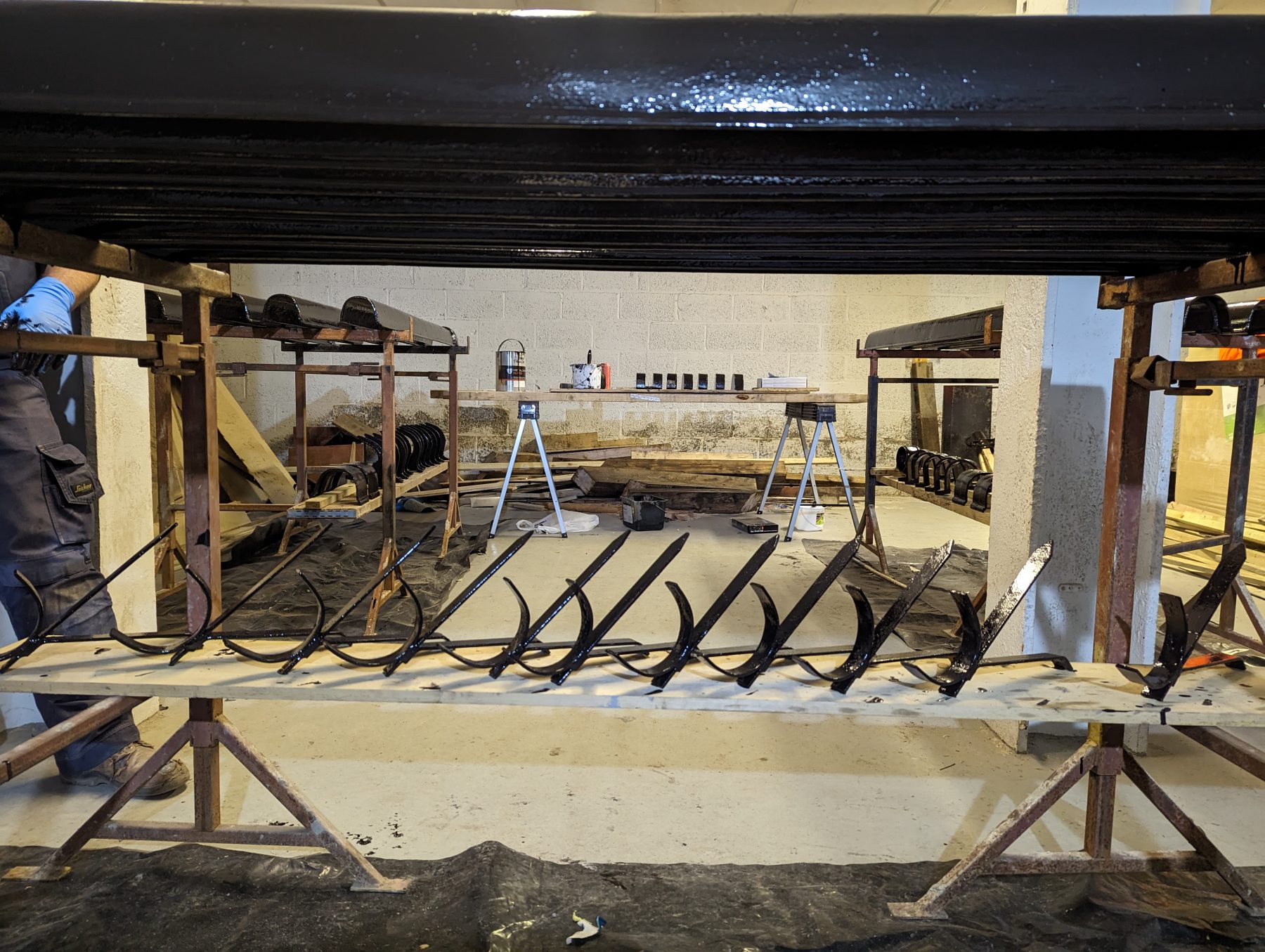
Watching paint dry: cast iron brackets.
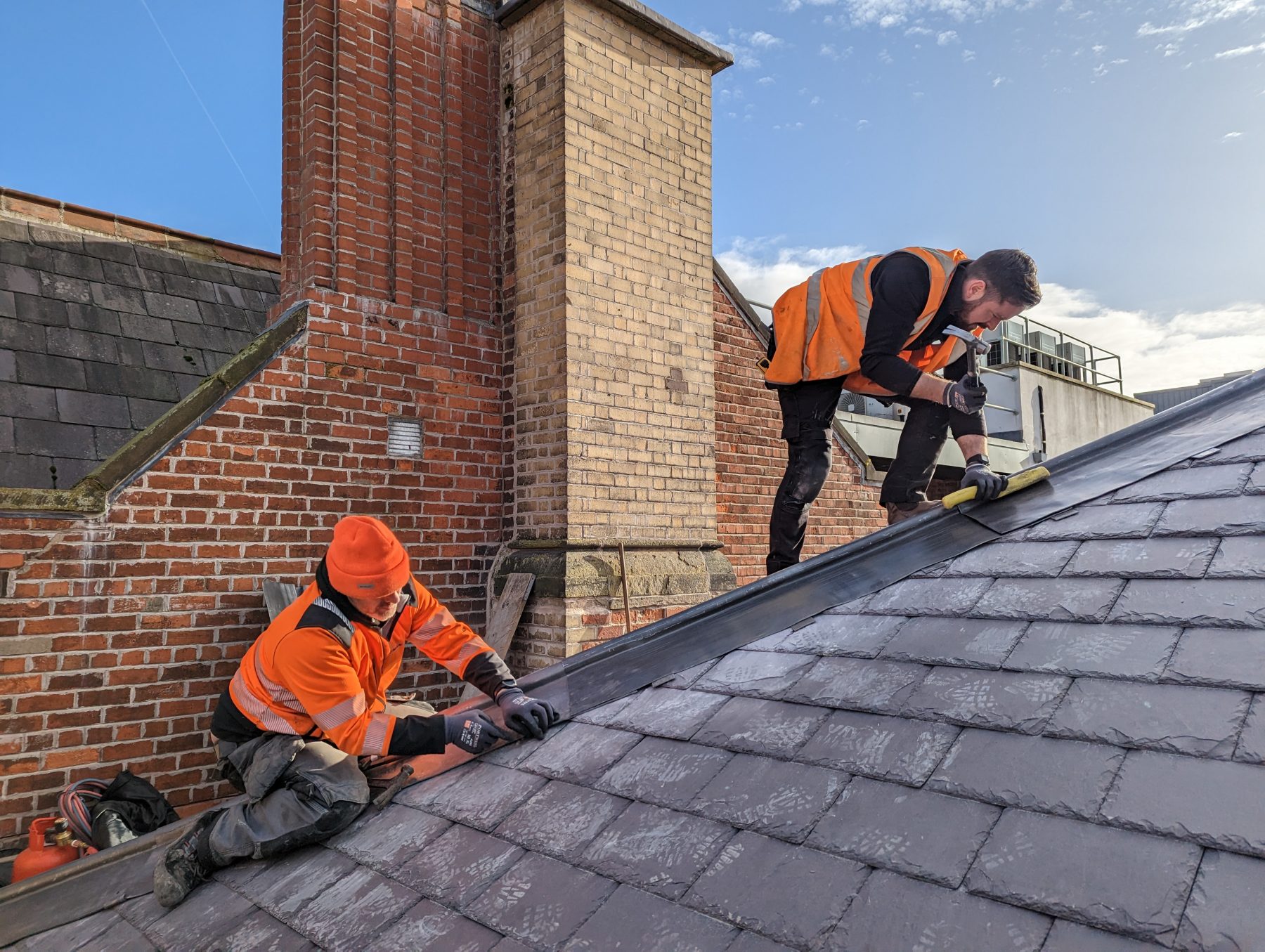
Laying the lead hip ridge. 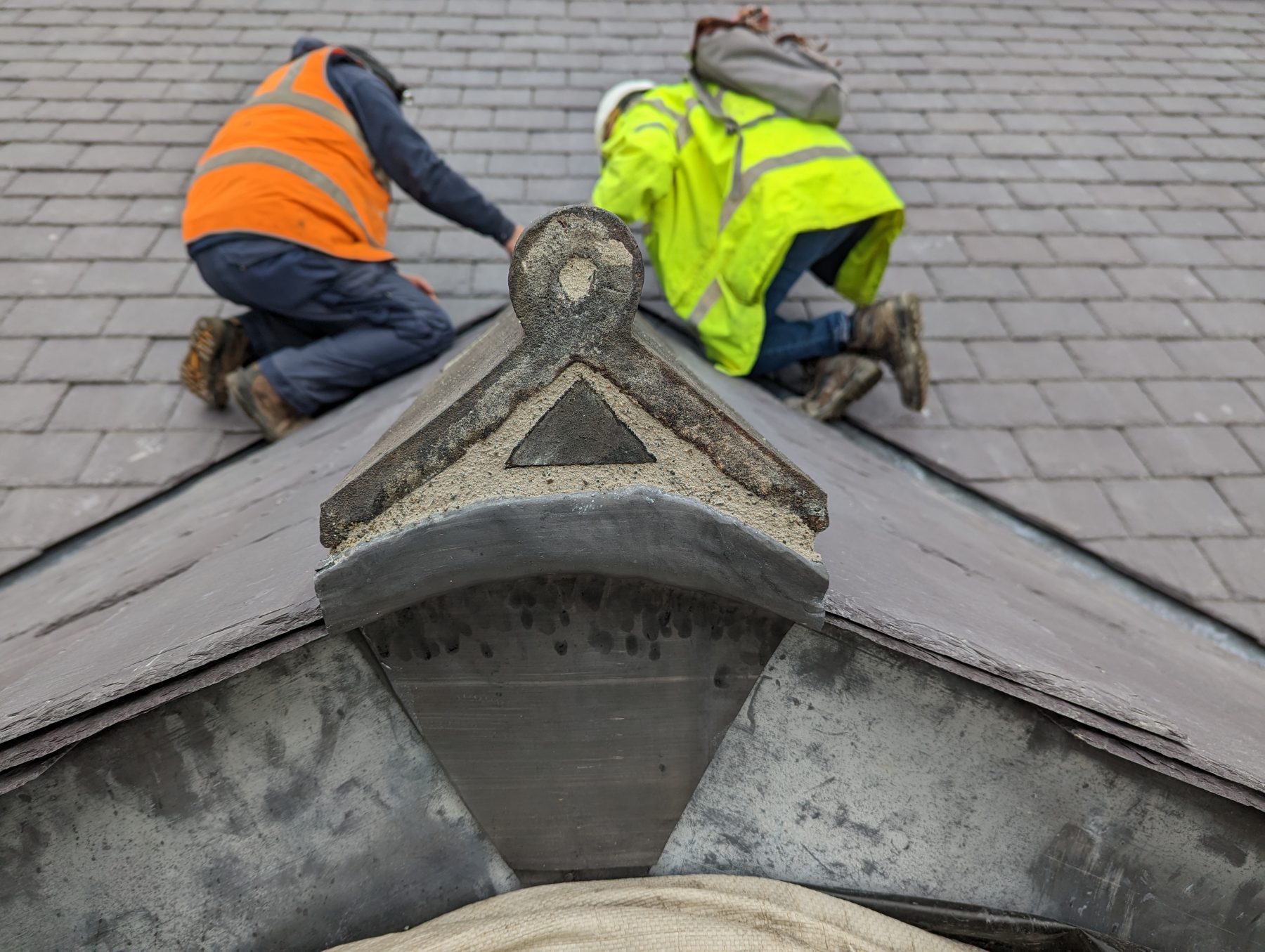
Inspection of junctions and ridge detail.